
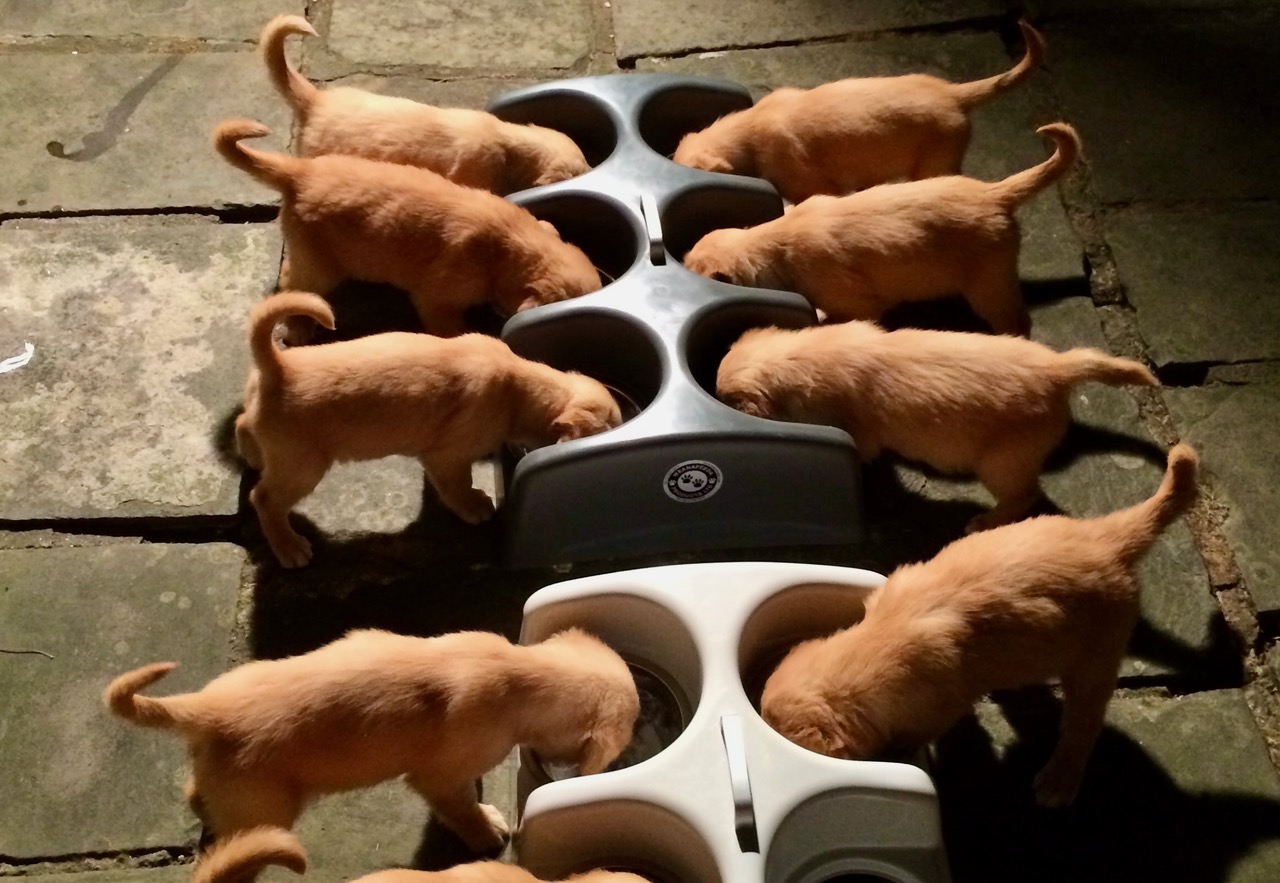
Do any of you remember the garlic-breath epidemic in dogs 40 years ago? My first case was a Jack Russell terrier. When I lifted her lip to check the colour of her gums, I was blasted by enough aroma to incapacitate a flotilla of vampires.
‘Does Leia get home cooking?’ I asked and was told she only eats dog food. It was the same with all the other dogs that made my examination room smell like a great Italian kitchen. They ate tinned food varieties from just about every major British pet food maker, so I thought it couldn’t be their food. But it was. Because all the manufacturers bought the vitamin supplements they added to their foods from the same producer. And that supplement, accidentally, had garlic in it.
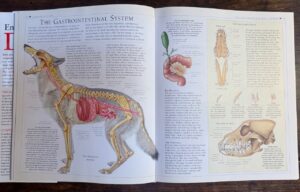
Bruce’s Encyclopedia of the Dog illustrates canine digestion.
Garlic breath was a giggle but do you see how easy it is for mistakes to happen, even to the most responsible of pet-food makers? This year, both Nestle and Danone had to recall infant baby formula because of ‘cereulide’ contamination via a shared, third party, ingredient supplier.
Last year the only voluntary pet food recall in the UK was for frozen raw food that may have been contaminated by the bacteria Salmonella. In the 2020s most voluntary recalls have involved raw foods but even major pet food makers such as Purina or Mars have issued voluntary recalls, for example, for a too high vitamin D level in dog food.
Today, prepared dog and cat foods are almost invariably nutritionally well balanced but that wasn’t always so. In the 1970s, a deficiency of the amino acid taurine in cheap, dry cat foods caused some cats’ hearts to dilate like balloons – ‘dilated cardiomyopathy’. Cat food manufacturers learned to add taurine to their foods.
At York Street we virtually never see dogs or cats with problems caused by a diet deficiency or an excess or a contamination or a toxin. Overwhelmingly the most common food-related problem we see is food intolerance, with the food just not being a good fit for that individual eater.
Food intolerances cause diarrhoea, and if your dog or cat develops an intolerance, it will tend to be to the most common food it eats. In the UK, chicken is the most common protein in pet food, so chicken is the most common cause of intolerance here. In North America, where beef is the most common protein in pet food, pets are most likely to develop intolerance to beef.
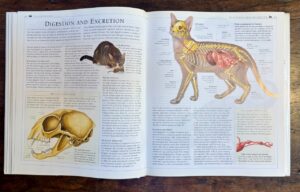
Bruce’s Encyclopedia of the Cat explains the different nutrition needs of all felines.
In most cases, the solution to an intolerance is to give your buddy a different type of food. Try something completely different, for example fish, gradually switching over a week from the old to the new diet. Home cooking is almost always enjoyed and, with the right ingredients results in good stools. The fresh food makers Butternut Box and Marro do the cooking for you if you like. If you are an existing Butternut Box customer use the discount code LVC15 to get 15 % off your next six purchases. If you’re a new customer use the discount code LVC to get 50% off your first two purchases.
At Marro, get 40% of the first two boxes with this link.
If your dog or cat’s ‘food intolerance’ lasts more than several weeks it may be developing “IBD” or irritable bowel disorder and this may be associated with eating highly processed food. If you’d like to discuss diet in more detail book a telephone consultation with either the vets or nurses. I’ll discuss IBD more next month.