
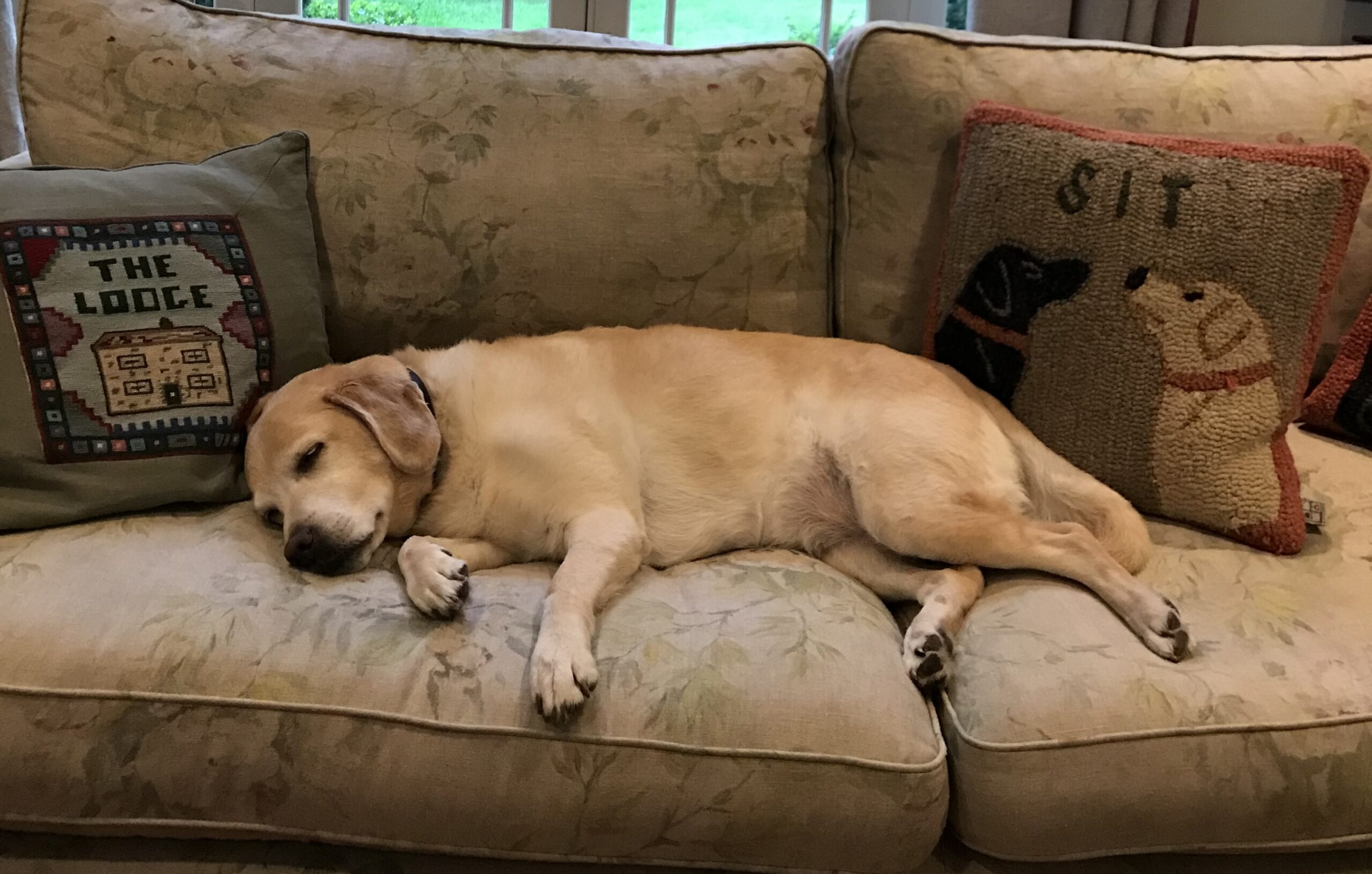
At York Street our completely unscientific, pulled out of a hat, statistic is that one in four of the pets we see is obese. If that’s so your companions are on the good side of Britain’s pet population. UK Petfoods, an association of pet food makers tells us that half of the nations’ pets are obese. So does the PDSA, a charity for sick pets. And, for sure, if your dog or a cat is obese it is more likely to suffer from painful osteoarthritis, develop cancers and have a shorter life expectancy. There aren’t many pluses to being a fat dog or a fat cat.
I live with lean Golden Retrievers but I know that Goldens are two and a half times more likely to go to fat than crossbreds are. Pugs are three times more likely to get obese than crossbreds while German Shepherd Dogs are at the opposite end of the spectrum, only half as likely to go to fat. Just as with people, it’s not just Christmas treats, there’s a genetic component to getting fat so should vets be asking pharmaceutical companies about effective appetite suppressing injections such as Ozempic?
Appetite suppressing drugs can be amazingly effective for some of us. I have a client who I almost didn’t even recognise, he had lost so much weight. “I’ve been to Lourdes!” he beamed as he walked into the reception room, no longer supporting himself with walking sticks.
Technically, Ozempic is called a GLP-1 agonist. It dampens down the reward circuitry in the brain. That’s how it reduces people’s motivation to eat. It could be useful in veterinary medicine. Or maybe not.
Fifteen years ago a completely different drug, a tablet called dirlotapide or Slendrol, manufactured by Pfizer, was licenced to treat obesity in dogs. It worked in a completely different way, reducing fat absorption in the intestines and triggering an “I’m full” or “satiety” signal from the intestine wall to the brain.
It failed for several reasons. First of all us vets didn’t feel comfortable getting weight off pets by using drugs rather than by training their people to feed their companions more sensibly. Then there were side effects such as nausea. Many dogs did eat less although who knows whether this was caused by nausea or the drug inhibiting appetite. In either instance, when dogs given this drug lost their appetite they also lost interest in their human companions. Would you like to share your home with a thin and now joyless dog?
Just like us, dogs and cats have in their brains an evolutionary reward system, there to help them get food, water, salt, sex and companionship. Ozempic has been used often enough by people for us to know that while it dampens down the motivation to eat it doesn’t do the same for our motivation for water, salt, sex or being with others. It is proving to be a fascinating new medicine for a variety of human health problems. But if your dog or cat is overweight and you visit us, we’ll continue to speak on their behalf and remind you there are few upsides to being overweight, and you’re in charge of their kitchen. We can suggest commercial or home cooked diets to help you pet return to physical fitness.