July Celebrates Canada Day
and American Independence Day
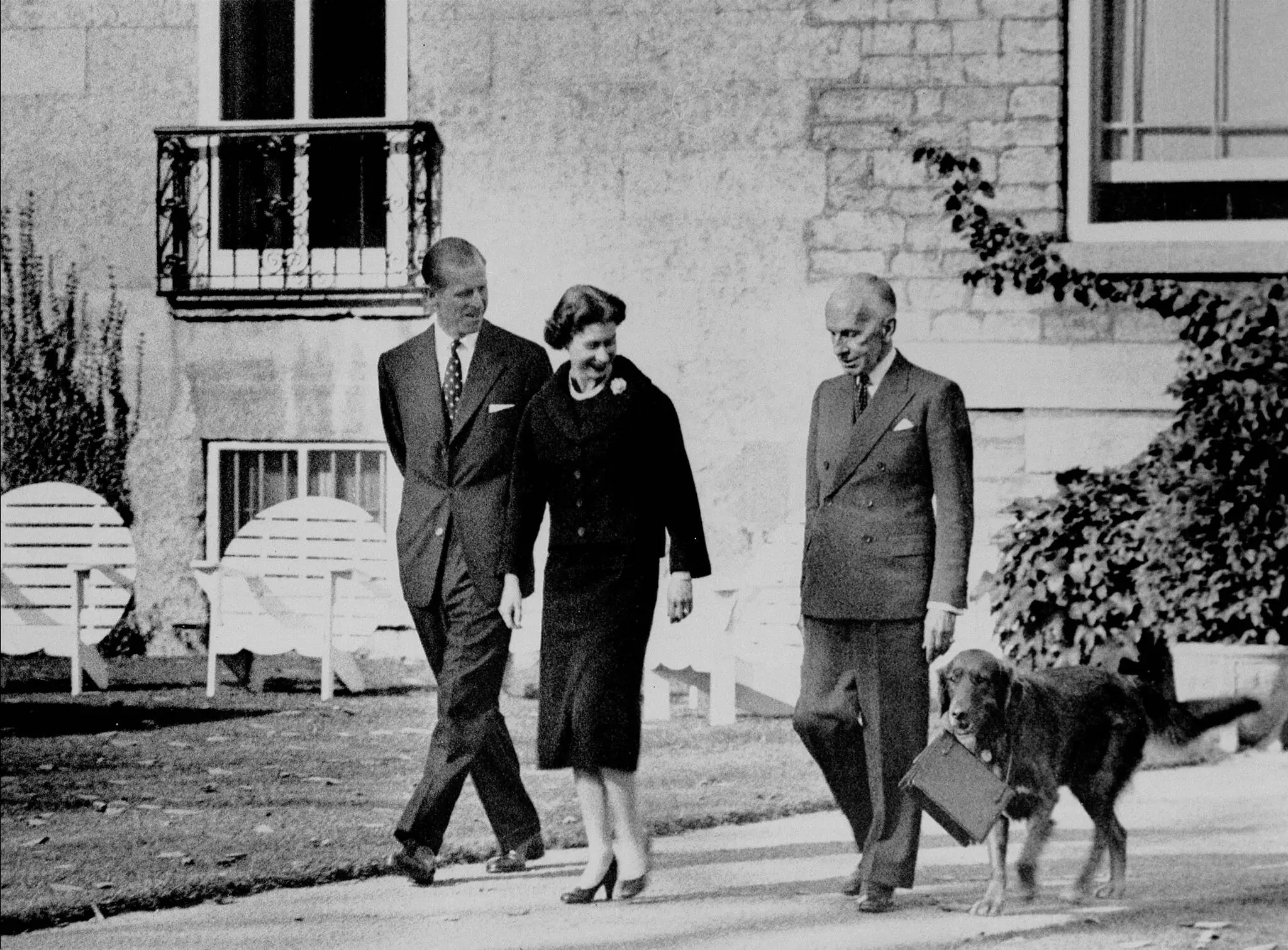
I love this picture not just because the Canadian Governor-General Vincent Massey’s golden retriever Duff has found the young Queen Elizabeth’s handbag during a royal visit to Ottawa in the 1950s. It’s because there are three degrees of separation between me and everything in this picture.
Ottawa is where my father grew up. The Muskoka chairs on the left are similar to ones I have in my own garden. And 50 years after this photo was taken I met Queen Elizabeth when she appointed me an M.B.E.
It’s stretching the degrees of separation a bit but Vincent Massey’s brother was the actor Raymond Massey. My wife Julia never acted with Raymond but she did with Raymond’s son, Daniel Massey in George Bernard Shaw’s Major Barbara.
The first of July is Canada Day, celebrating 159 years of Confederation. And the fourth of July is the 250th anniversary of American Independence. To all our Canadian and American friends, and especially to vet Adam Rouan who is from Philadelphia where the Declaration of Independence was signed, happy holidays.
We should protect against Leptospirosis more diligently
“Can you vaccinate my dog against hantavirus?” I was asked. That’s a seemingly innocuous and not unexpected question right now. After all, human deaths on a cruise ship, caused by a hantavirus were front page news in May. But I rumbled with frustration because the person who asked me that always declines our advice to vaccinate her dog against Leptospirosis – a life threatening illness, because “I’ve seen on social media that the vaccine isn’t safe.”
Before explaining what Leptospirosis is and why we should protect our dogs from it, a few words about hantaviruses. There are varieties of hantaviruses worldwide. Arizona, for example, is a hot spot. The nearest to us is in Sweden and Finland. That hantavirus causes kidney damage in people but like all hantaviruses, dogs appear to have a natural resistance to them.
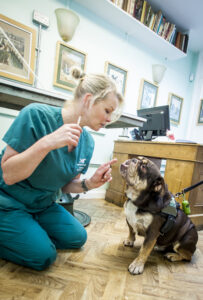
Preventative leptospirosis vaccine is part of core protection.
Vaccine worry is different from being an antivaxxer
Antivaxxers have always been around. I have long standing friends who are antivaxxers and I know it’s impossible to discuss the science of vaccines sensibly with someone convinced that vaccines are part of a medical-industrial-political conspiracy.
Vaccine worries are different. The question about hanta virus was from a worrier. She has her dogs vaccinated against other diseases but is concerned about leptospirosis vaccine. So where did her worry about “Lepto 4” come from?
Before Lepto 4 was introduced in 2013 there was no more worry about the existing Lepto 2 than about any other vaccines. Lepto 4 was introduced because Lepto 2 didn’t provide protection against varieties or ‘serotypes’ of Leptospirosis causing disease in dogs in the UK. Lepto 4 does offer protection but some people felt it commonly caused worrying side effects. The Veterinary Medicines Directorate monitors adverse reactions and found no statistical difference between those caused by L2 or L4 (and reported that serious adverse reactions were rare for both) but the idea became embedded. I’ve had a new pup purchaser tell me she had to sign a document saying she would never have her pup vaccinated with L4!
Read more about dog and cat vaccine hesitancy and why I am relaxed about vaccines for my pets or myself in this month’s blog ( I remember when life-threatening infection was a weekly reality in veterinary care) but let me explain more about Leptospirosis itself, why the disease is more dangerous than we think it is and why we should routinely vaccinate our dogs against it.
Leptospirosis is more common than we think
Leptospira bacteria are transmitted in the urine but also in the tissues of infected animals, mostly rats but also foxes, hedgehogs and farm animals. The bacteria thrives in canals, rivers, ponds or puddles. Dogs can contract the disease through their eyes, nose, mouth, even cuts on the skin. It is frustratingly difficult to diagnose. Unexpected sudden and fatal kidney or liver failure can occur. And at the other extreme, a dog may have no clinical signs of infection whatsoever but pass it on to others.
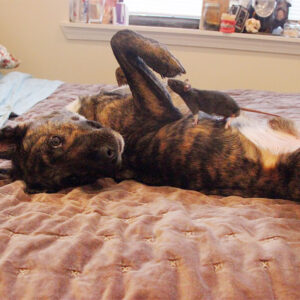
“Osiris” has been vaccinated against leptospirosis that can be transmitted via his rat friend’s urine.
The antiviral vaccines we use at the London Vet Clinic to protect your dogs and cats against a variety of viral diseases are all long lasting, giving protection for a minimum of three years. We can monitor the continuing existence of antibodies against viral disease from a blood sample. Antibacterial vaccines such as Lepto 4 or Kennel Cough bacteria need annual boosting and there are no blood tests to monitor ongoing protection.
I don’t know where the anti-Lepto 4 movement come from but there’s neither logic nor science associated with it. Yes, of course, just like us, dogs can have a vaccine reaction, a local swelling where it’s injected, some local discomfort that can subdue activity but we accept these signs that a vaccine is doing its job for us so why not for our pets too? An adverse reaction occurs in 4 out of each 10,000 Lepto 4 injections. Serious reactions are much rarer than that.
Cat and dog antibacterial vaccines don’t give long protection the way antiviral vaccines do. Protection requires two injections and lasts about a year. If there’s a delay giving a booster we’re comfortable giving a single booster within 18 months before reverting to guidelines advising two injections to stimulate protection. If you have any questions about the need or the value of any vaccinations please ask us.
How is dementia diagnosed in dogs and cats?

Women were rarely accepted as students at the Ontario Veterinary College until a few years before this portrait was taken.
Dogs and cats are living longer than ever so it’s no surprise that ‘geriatrics’ is as important a part of our day to day experience as is ‘paediatrics’. Just like us, older cats and dogs sleep more and can change their eating and toileting habits. Aging is normal. We don’t think of aging as a disease but we also know that many diseases increase as the years go by.
If your mature dog or cat has changed any of its habits, please let us know. We’ll be able to tell you if these are normal aging changes or ones that, with a little help from altering routines or adding medicines, can be improved.
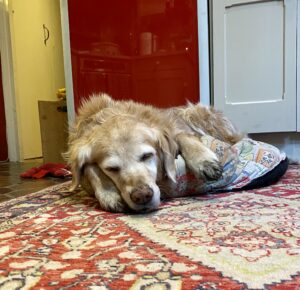
Although she is almost 17 years old in this picture, the mud on her feet reveals that Bean was still active outdoors.
For more information on how to tell if you dog has dementia, read Does my dog have dementia?
Physiotherapy for your companions is now available at York Street
Some of you know that in the right circumstances and provided by experienced hands, physiotherapy is just as beneficial for pets as it is for us. Until now we have referred you elsewhere for veterinary physiotherapy but starting last month Sarah Beale, a highly experienced physio, is available at 84 York Street.
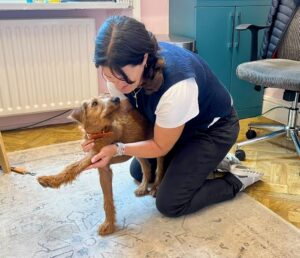
Sienna meets her physio, Sarah Beale at 84 York Street
Sarah Beale, BS, MSc, MCSP hasn’t arrived at the London Vet Clinic out of the blue. Sarah is an abundantly skilled Chartered Physiotherapist, registered with the Health and Care Professions Council, who finds working with patients with four legs very rewarding. Sarah has been Grant Petrie’s favoured physio for some time.
Sarah obtained her BS in Physiotherapy at Keele University and has been an Advanced Clinical Practitioner at the Royal Free Hospital in north London and in Berkshire. Fourteen years ago Sarah completed her MSc in Veterinary Physiotherapy at the Royal Veterinary College undertaking research in collaboration with Michigan State University. This unique combination of human and veterinary rehabilitation expertise enables her to deliver evidence-based care tailored to the needs of our companions.
Sarah has extensive experience across both referral and first-opinion practice, including leading the Rehabilitation and Pain Management Service at Langford Vets, part of the University of Bristol Veterinary School, and as I mentioned working in tandem with Grant here at the London Vet Clinic.
Sarah has a particular interest in rehabilitation after injuries or surgery, managing chronic pain and helping pets maintain function, comfort, and independence throughout all stages of their lives.
Collaborating with both you and us, Sarah develops personalised treatment plans that support each individual’s recovery, mobility, and long-term wellbeing. She provides one hour physiotherapy appointments on Fridays at 84 York Street. As you know, while there’s no added VAT for human physio there is for pet physio. An initial one hour session with Sarah is £180 including VAT. Follow up sessions are £125 including VAT.
Amy in Reception on 02077232068 books appointments with Sarah.
…and finally
Natalia is expecting a baby
Many of you already know that Natalia’s son Pedro will be joined by a sibling later this year. That means Natalia will be otherwise engaged from August onwards. While Natalia concentrates on human infant behaviour we have asked her colleague Antonella Marsicano MSc (Clinical Animal Behaviour) BA (Communications) to manage the clinic’s Behaviour Service. Antonella is a Certificated Clinical Animal Behaviourist (CCAB) accredited by the Association for the Study of Animal Behaviour (ASAB). We’ve asked Antonella to tell you about herself.
Antonella Marsicano MSc, BA, CCAB
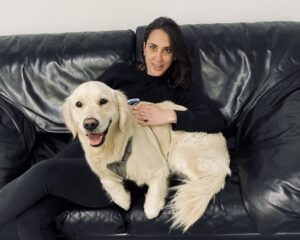
Hello everyone. I am Antonella and I grew up in Venezuela in a multilingual and multicultural family. My mum is French, my dad is Italian, and I grew up speaking Spanish, French and Italian. From quite early on, I became fascinated by communication and how language is much more than words. It shapes culture, perspective and the way we interpret the world around us.
Looking back, I think that is what naturally drew me towards animal behaviour. To me, dogs communicate through their own language of signals, emotions and context, and one of the most rewarding parts of my work is helping owners understand what their dog is trying to communicate and helping dogs feel understood in return.
Before working in behaviour, I had a career in the corporate world. My transition into this field started when my Miniature Schnauzer developed behavioural challenges at around seven months of age. I remember feeling quite helpless and frustrated that the advice I was receiving did not seem to be helping. That experience pushed me to start learning more about dog behaviour and training.
What started as trying to help my own dog quickly became a passion. I found myself unable to stop learning, which eventually led me to retrain professionally and complete an MSc in Clinical Animal Behaviour at the University of Lincoln in 2017.
I have been working in dog training and behaviour since 2014 and what I enjoy most about the role is acting as a “translator” between dogs and their families, helping both sides understand each other better and building relationships that work for everyone involved.
Vicky Stavropoulou, MSc (Clinical Animal Behaviour), BSc (Zoology, RVN will continue to provide you with support with cat behaviour challenges. If you would like to book an appointment either with Antonella or with Vicky, please telephone Reception on 02077232068 and to speak with Amy.
We hope you enjoy a warm and healthy summer,
Bruce and the team at York Street