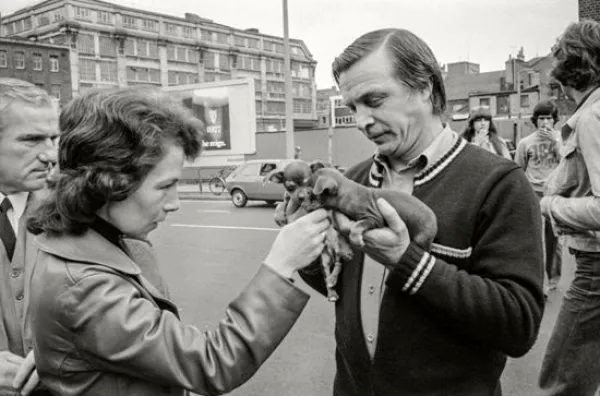
Club Row’s animal market was the major source of pups in London in the 1960s
My wife’s obstetrician Jack Suchet had been delivering babies for 40 years when he delivered ours, between 1968 and 1976. I was Jack’s dog Cindy’s vet and one day I asked Jack what the greatest change was during his career in medicine. “Early in my career, children dying from disease was not unexpected. Today, a single child dying from infection is a tragedy.” Just a few generations ago, when my grandparents were born, 50 percent of childhood mortality in the UK was caused by infectious diseases such as diphtheria, whooping cough and measles. Infection remained a killer even into my lifetime. In 1948 I took my first airplane flight, from Montreal to Toronto, not for convenience or because my parents were wealthy but because my mother wanted to protect me from crowded trains during late summer’s ‘polio season’. There are very few vets today who were practicing when Infectious diseases such as distemper and hepatitis were diagnosed every week. But I was there. In London, the major source of infected pups was the Club Row animal market. Market bought pups and dogs from rescue centres routinely died from pneumonia, gastrointestinal conditions and brain inflammation caused by distemper virus. Those that survived might have life long brain conditions or ‘hard pad’, another name used interchangeably with ‘distemper’.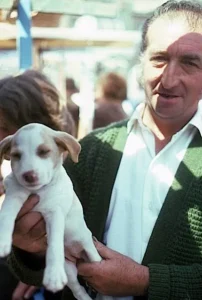
Club Row in Shoreditch continued to be a source of dogs until it closed in 1983
A very short vaccine history When I came to London in 1970, distemper and hepatitis vaccines had been available for some time but only a small part of the dog population received them. I treated infected dogs with antiserum from other dogs that had survived infection as well as antibiotics and other medicines. It wasn’t until the 1980s after a majority of dogs had been vaccinated that infection became so rare in the south of England that most vets today have never seen a case. Elsewhere in the world distemper is still a dog killer.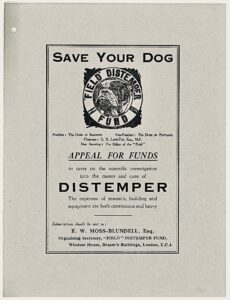
The development of a vaccine to prevent distemper was publicly funded by dog lovers
Parvovirus jumped to dogs in 1979 A parvovirus moved from foxes to dogs in the late 1970s. And because this was a ‘new’ virus in the dog population, it was a killer. At first we used a cat parvovirus vaccine. It gave some cross protection but a canine parvovirus vaccine was quickly produced and ever since deaths from infection have become very rare. I’ve saved many pets lives, with insulin, with antibiotics, with corticosteroids but I’ve saved more lives by preventing infection with vaccines than with any other treatments or medicines. Years ago, I visited Cornell University to spend a day with Prof ‘Skip’ Carmichael, the vet who created the first parvovirus vaccine and I asked him if some vaccines gave longer protection than others. He told me the world’s most effective dog and cat vaccines were produced by a Dutch company. Today those vaccines are produced by MSD (Nobivac) and Virbac (Canigen). Those are the vaccines we use at York Street.