I had been a vet for only 13 years when I was invited to Vienna in 1983, to the Nobel Prize winner Konrad Lorenz’s 80th birthday. I’ll come back to this smug boast in a minute.
This summer has been really tough for some flat-faced dogs especially Pugs, French Bulldogs and English Bulldogs. Summer is when on hot days dogs lay down in the park and refuse – actually can’t – move on. They arrive at York Street glassy-eyed, their sides heaving like bellows. London summers have become unpredictable, but as the city grows warmer and the heatwaves longer, we’re seeing more summer heat stroke victims. Over 75 percent of heat-related illness in dogs is caused by exercise.
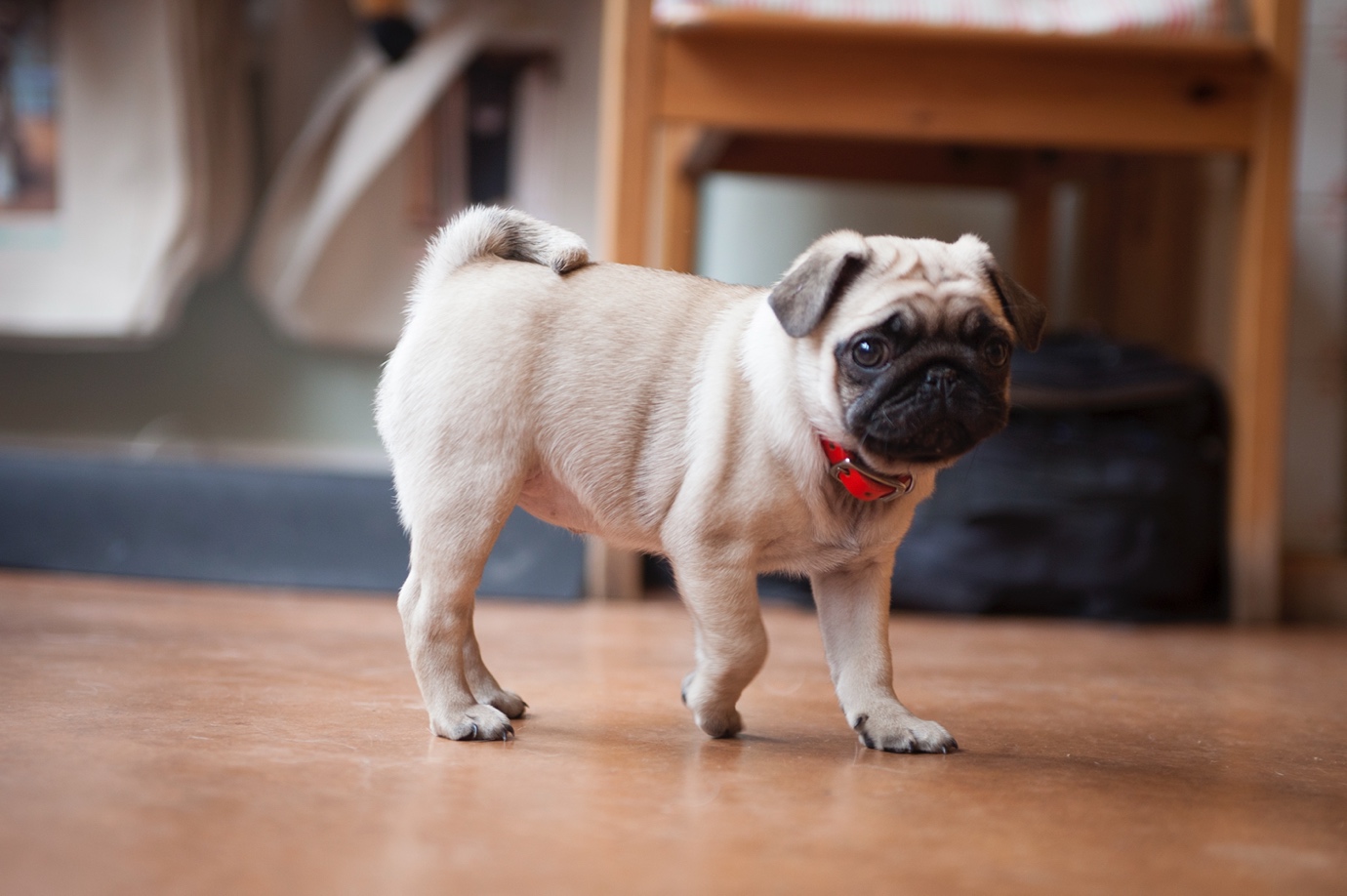
Pugs, French Bulldogs and English Bulldogs, breeds with flat or almost flat faces— are among the most popular dogs that we see. They are idiosyncratic and quirky. I think most of them really do have a sense of humour. But that’s a fringe benefit we learn about after living with them. Is the real reason we are so attracted to them because they’re so endearing in a baby-like way?
I got interested in people-pet relations soon after graduating so I read what I could find on the subject. Four years before I met Konrad Lorenz, the evolutionary biologist Stephen Jay Gould wrote a brilliant essay in Natural History magazine called “Mickey Mouse Meets Konrad Lorenz“, in which he described how Walt Disney’s animators, over the decades, gradually made Mickey Mouse more infantile — larger eyes, rounder head, shorter snout — to make him more endearing to audiences. Gould connected this to Konrad Lorenz’s Nobel prize winning concept of Kindchenschema, the constellation of infantile features including big eyes, a domed forehead, a foreshortened face, that trigger in us humans an almost involuntary nurturing response. We are hardwired, Lorenz argued and Gould reiterated, to find Kindchenschema or ‘baby-faced’ or ‘cute’ creatures irresistible.
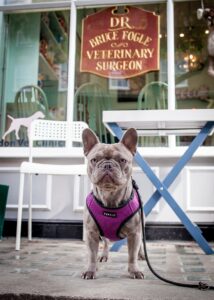
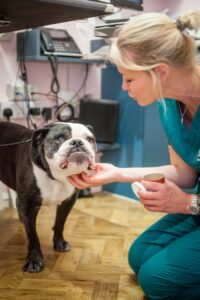
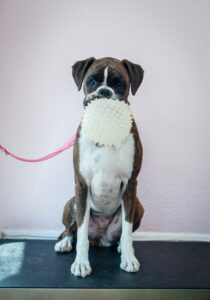
Look at the dogs in these pictures of dogs visiting York Street. Do they not look as if they were designed by Walt Disney? They press every one of our nurturing buttons. They’re looks trigger our caring needs but at great cost to the dogs themselves. Sentiment overrides our common sense and the dogs pay the price. It’s not uncommon that because we’ve bred them for baby-like flat faces we need to operate to enlarge nostrils or tighten soft palates so that these dogs can breathe easier. And this summer we seen them suffering from life-threatening heat stroke.

A dog cools itself by panting — moving air rapidly over the moist surfaces of the mouth and throat. On a sunny summer day it may be only 22 degrees C outside, but in your car with the air conditioning off it can be over 47 degrees C. A flat-faced dog cannot cool down effectively. Their nostrils are often too narrow, their soft palates too long, their tracheas too small. On a warm day, even a modest walk can become a physiological struggle. On a hot day or being left in a car, even for minutes, can be life threatening.
The signs of heatstroke come on fast, heavy, frantic panting that is more laboured than normal, restlessness leading to incoordination. The gums, which should be a healthy pink, turn bright red, then pale, then grey or blue. Drooling becomes excessive. A dog may vomit, collapse, or lose consciousness. These can be life and death emergencies. Every minute matters.
If you see these signs move the dog to the coolest place available, into shade or better, into an air conditioned location. (I just counted. We have 12 separate wall or ceiling air conditioners at the clinic so that we can be as flexible with temperature as possible.) Offer small sips of cool (not ice cold) water. Wet the least hairy parts of the body, the paws, groin, armpits, with cool water and fan the dog. If there’s a hose, hose down on the neck. Do not wrap the dog in a wet towel. That can trap heat. Then get to us as fast as you possibly can. Ring ahead so that we’re ready for you. Don’t wait to see if your dog improves on its own.
The British Veterinary Association and the British Small Animal Veterinary Association have both taken clear, public positions: they actively advise against buying flat-faced breeds. The Netherlands, Norway, and Germany have implemented or are implementing legal restrictions or outright bans on the breeding of dogs with extreme flat-faced traits.
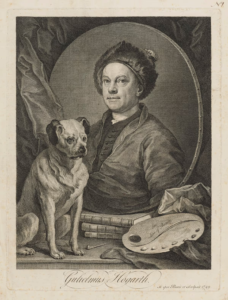
I happen to disagree. Banning a breed rarely if ever works. Becoming more creative with breeding is better. The Kennel Club should allow the introduction of healthier genes into a breed. For example, add some Beagle to Pug then breed to look more Pug-like but with round nostrils and ski ramp noses like they had 100 years ago. Look at William Hogarth’s 18th century painting or engraving of his Pug Trump to see how much we’ve changed them. Don’t ban breeds. Breed back to the way they once were. That won’t damage their fun personalities but will make their lives healthier and happier.