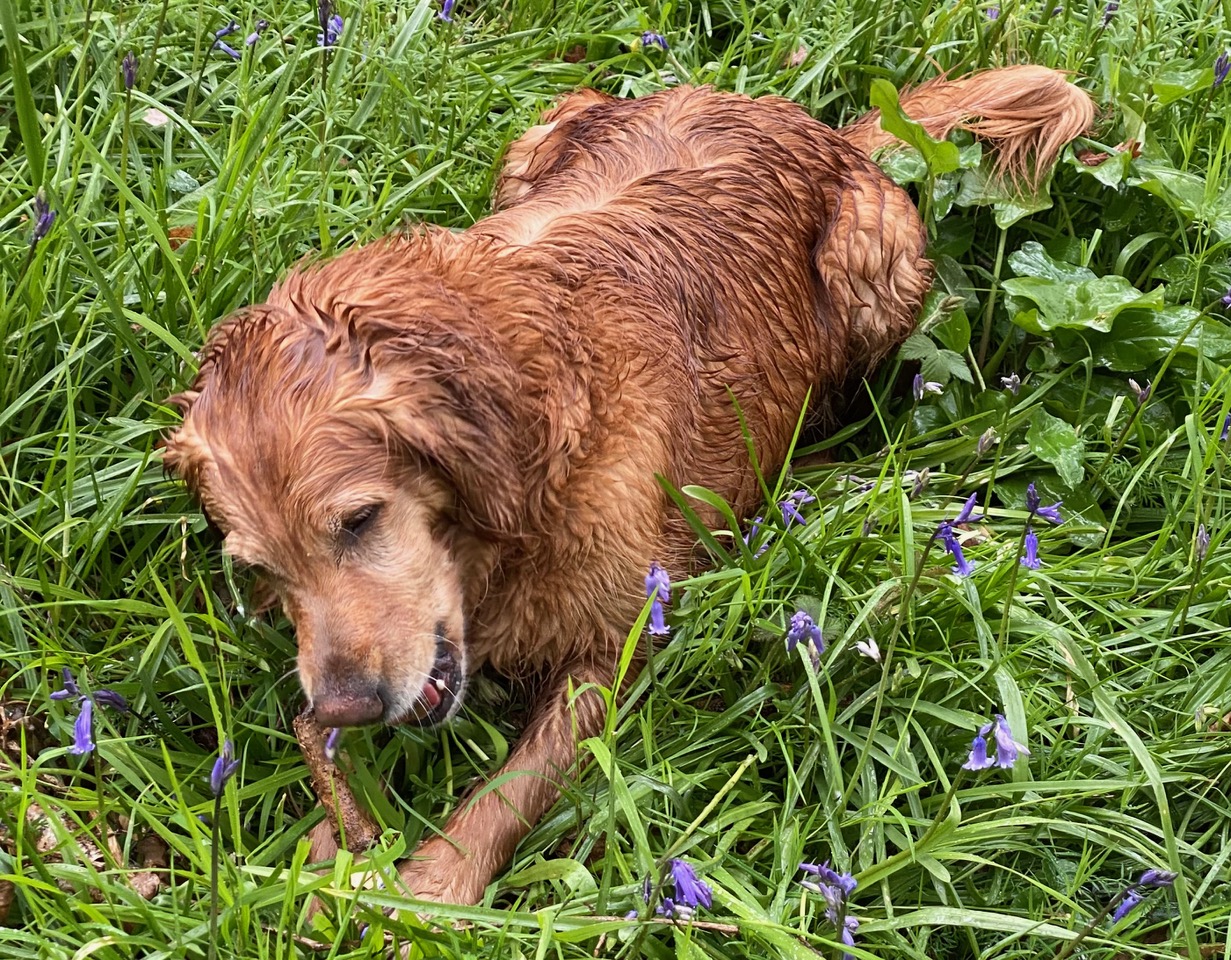
Chewing sticks is fun but it doesn’t clean teeth!
Before getting to the nitty gritty of healthy teeth and gums it’s useful to understand what happens in the mouth and what specific words mean.
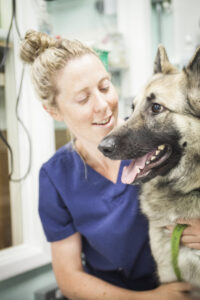
This healthy mouth can be kept in fine condition with a little help from us.
Plaque – Calculus – Gingivitis – Periodontitis – Loose Teeth
Invisible plaque naturally forms on clean tooth and is easily removed by brushing. If plaque isn’t removed, within 2-3 days it becomes mineralised and becomes calculus. Calculus gets inhabited by bacteria, usually ones called anaerobes that cause bad breath or halitosis. Calculus causes gum inflammation, called gingivitis. Gingivitis is completely curable by scaling and polishing the teeth. If gingivitis isn’t cured it leads to periodontitis. This loosens the tooth’s attachment to its surrounding bone. Periodontitis can be contained but not cured. If it progresses, it leads to loose teeth. Loose teeth can never be saved. If a tooth has become loose you pet is healthier if that loose tooth is removed.
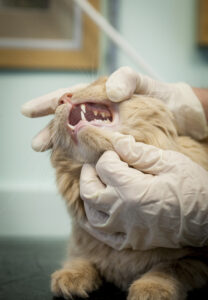
Look carefully and you can see plaque with associated gingivitis on the back teeth.
Pain may or may not affect eating
Periodontitis, fractured teeth, root exposure and associated infections are all painful, although many dogs and cats continue to eat. Tooth and tooth root scaling followed by polishing reduces inflammation and helps restore comfortable chewing, grooming and normal behaviour.
Bad breath
Periodontitis is a major cause of bad breath in dogs and cats. The bad smell comes from gas forming (anaerobic) bacteria. Scaling and polishing removes the bacterial “biofilm” and debris responsible for bad breath. If these are removed antibiotics are not needed.
What happens if nothing is done
Untreated periodontal disease creates a chronic inflammatory burden, with bacteria getting into the circulation. In cats in particular this is associated with chronic kidney disease. Treating periodontal disease is particularly important in pets with heart or endocrine conditions or those with conditions that reduce the efficiency of their immune systems.
What you can do at home
Toothbrushing is most effective
Toothbrushing at least every other day with a pet toothpaste cleans the gingival margin and is the single most effective method to prevent gingivitis and to slow periodontitis. Less frequent brushing won’t maintain periodontal health. Use a pet toothpaste. These don’t foam or have fluoride in them. Start gradually and positively by just massaging the gums then progress to tooth brushing. The outer sides of the large side teeth is where most plaque accumulates.
Chlorhexidine-based products are best
Chlorhexidine is an anti-plaque antiseptic. It binds to the gums and is slowly released. Chlorhexidine tablets, rinses or gels reduce plaque, gingivitis, attachment loss and gingival recession. If your pet hates its teeth brushed these products are ‘second best’ to brushing.
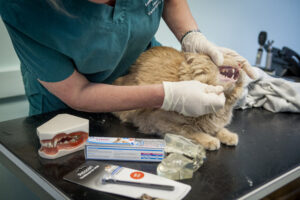
The toothpaste in this picture contains anti-plaque chlorhexidine.
Dental diets , chews, toys and treats may help
Specially engineered dry, fibrous “dental” kibbles are said to scrub tooth surfaces in dogs. Some dental kibbles are polyphosphate coated. This is said to reduce calculus formation. Special treats, chews and toys can reduce plaque and calculus. (There’s some evidence these benefit cats as well.)
Supplements may or may not help oral health
There are many non-prescription nutraceuticals or topicals marketed to support oral health. These are often plant based extracts including, for example, blueberry, papain, yucca or pomegranate. It’s very unlikely they have any significant effect reducing plaque or calculus. On the other hand, products containing the antiseptic chlorhexidine are beneficial for oral health.
Gnawing beef bones has advantages and disadvantages
Gnawing on beef bones reduces visible calculus but probably doesn’t prevent periodontal disease. (The prevalence of periodontitis is high – over 40% – in street dogs that regularly feed on bones.) Most dogs enjoy gnawing on hard bones but scaling and polishing below the gum line is what saves teeth. Some dogs enjoy chewing beef bones so much they fracture some of their teeth.
Preventative mouth care is safe and effective at York Street
Scaling and polishing are not cosmetic procedures; they are core preventive and therapeutic interventions that control periodontal infection, reduce pain, improve quality of life and help reduce internal consequences of chronic oral disease in dogs and cats.
General anaesthesia is virtually always safe
‘Anaesthesia free” teeth scaling is cosmetic. It’s not therapeutic. It does not remove subgingival plaque and comes with risks such as ‘aspiration’ – contaminated material getting into the windpipe. It does not prevent tooth loss. The Socials are filled with videos about how effective teeth scaling without general anaesthesia is. If this were possible we’d be doing it. I’m sure you know that our mantra is “Do no harm”.
General anaesthesia was once a risk but that was in the last century. We practice safe anaesthesia. Our Head Veterinary Nurse, Jessica Sproate, has an advanced qualification in general anaesthesia and monitors our protocols. Paloma, Stephen and Adam all undertake dental procedures many times each week.
At each dental procedure at York Street there is a dental nurse, the vet and an anaesthetic nurse. Routine blood haematology and biochemistry can be done before dentals to give us more background information, but the types of injectable and inhaled anaesthetics we use ‘self-destruct’. They don’t need the kidneys or the liver to break them down or excrete them.
Any dental procedure starts with a full mouth examination, periodontal probing and dental x-rays. Next, there is visible and under the gums teeth scaling, polishing and flushing. The ambient temperature is kept warm and the table itself has a thermostat controlled surface temperature. To ensure body warmth, small dogs are wrapped in a “Beare Bag” in which warm air circulates.
When the vet knows the procedure is almost finished the anaesthetic nurse turns off the low level of anaesthetic and the dog or cat now breathes only fresh oxygen. We usually see blinking and head movement within minutes. The anaesthetic is out of the body but the pain management or sedative medicines may keep a dog or cat quiet or dopy for a varying amount of time. Narcotic painkillers can make pets dopy for 24 hours, especially very lean ones.
A proper scale and polish usually takes 60-90 minutes. If mouth disease is particularly bad it may take longer but for the most severe mouth problems we use a phased approach so that a prolonged single anaesthetic isn’t undertaken. You are caring pet people so phased dental attention is rarely needed.
After it’s dental attention has been completed your pet’s teeth are Hollywood perfect and will stay that way with your help controlling plaque through daily oral care.
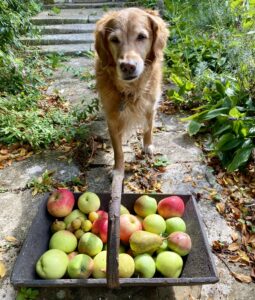
Eating apples and pears is nutritious but won’t clean your dog’s teeth. Tooth brushing or professional scaling keeps teeth and gums healthy.