

Since 1994, when evidence that good vaccines were more efficient than their manufacturers realized was first published, we have had a policy at the London Vet Clinic of vaccinating as infrequently as a dog or cat’s personal circumstances warrant.
We vaccinate and give booster inoculations according to an individual’s life style. We can do antibody titre tests to see if a dog actually needs a booster inoculation but rather than use “in house” antibody tests (that can produce false negatives), we use the “gold standard” and send all blood samples to the DEFRA approved specialist diagnostic laboratory used for rabies antibody titre analysis.
These are our general guidelines.
Preventing disease through inoculation is a technique that harnesses the body’s natural ability to fight infection. An infectious agent such as a virus or bacteria is modified so that it is no longer infectious but is still similar enough to its unmodified infectious form that when the immune system is exposed to it, the immune system creates antibodies, proteins that attach to and help destroy the specific infectious agent.
Vaccines are creating either by killing infectious agents, modifying them so they are still alive but no longer infectious or by taking vital components of them and, through genetic engineering, enslaving bacteria to produce replicas of these parts. Puppies acquire protective antibodies from the milk they suckle from their mothers soon after birth. These temporary antibodies usually last around six to 10 weeks although they can last longer, especially in Rottweilers and Dobermanns.
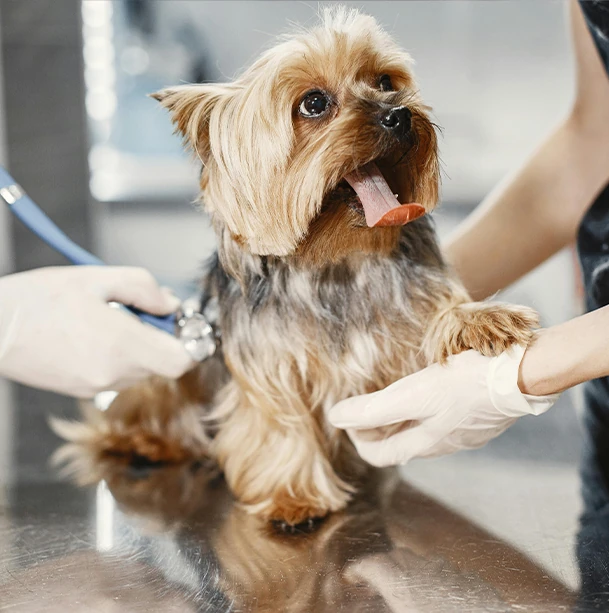

Socialising your pup during its primary inoculation is vital
Vaccine manufacturers advise not allowing your pup to visit public areas or socialise with other dogs until two weeks after primary inoculation finishes. This gives the vaccine makers legal security but is detrimental to pups’ social development. In central London we don’t feel this is necessary or beneficial to you or your companion. In this most critical time in your pup’s emotional development we suggest sensible exposure to the world he or she will live in.
Use your car or public transport
Every day, take a short car, bus or tube journey with your pup, rewarding calm behaviour with soothing words, touch and food treats.
Meet people
Take your pup to cafes, school gates and elsewhere so that he or she is exposed to the sights, smells and noises of London.
Meet other dogs
Serious infectious disease is rare in central London. Invite dog owning friends and family over to your home and visit theirs. Visit the Royal Parks. An overwhelming majority of people who take their dogs to Regents Park, Hyde Park and Kensington Gardens have had their dogs vaccinated against contagious diseases.
At fifteen months of age, an adolescent dog is given a booster inoculation against all of the above diseases. After that, boosters are given every three years with one exception, leptospirosis.
Leptospirosis is transmitted in rat urine and even the best lepto vaccine, the MSD product we use that provides protection not only against old strains of this disease but also against new strains that have emerged in Europe, is effective for approximately a year. If your dog is exposed to rat urine, and most dogs in London are, it should have an annual booster for its protection. If, on the other hand, your dog spends its outdoor life in a shoulder bag sipping espressos, its risk is less. We will discuss the advantages and disadvantages on a yearly basis. Of all components of vaccine, the one that is most likely to trigger an unwanted reaction, for example a transient fever or loss of appetite, is the leptospirosis component. This occurs more frequently in smaller dogs than in larger ones.
Have a look here for information about the different types of leptospirosis vaccines.
Homeopathic vaccine nosodes don’t work
It would be wonderful if homeopathic protection against transmissible infection worked but challenge studies show that it doesn’t. If you believe in homeopathic nosode treatment, by all means provide it for your dog, but don’t deny it the true protection of primary inoculations.
At fifteen months of age, an adolescent dog is given a booster inoculation against all of the above diseases. After that, boosters are given every three years with one exception, leptospirosis.
Leptospirosis vaccine provides protection for around a year so this is boosted annually. Of all components of vaccine, the one that is most likely to trigger an unwanted reaction, for example a transient fever or loss of appetite, is the leptospirosis component. This occurs more frequently in smaller dogs than in larger ones.
Puppies inherit temporary protection against viral diseases its mother was vaccinated against. This protection lasts 8-12 weeks, although in some breeds possibly a little longer. This is why pups usually get two inoculations typically at 8 and 12 weeks of age.
Routine ‘jabs’ don’t protect dogs against the most common causes of canine cough in London, a bacteria called Bordetella bronchiseptica and a canine respiratory coronavirus (that it completely unrelated to the human pandemic respiratory coronavirus.
If your dog is walked by a dog walker, attends dog day care, visits a kennel or in other ways spends time with dogs you don’t know we suggest inoculation against Bordetella and Parainfluenza, another less common cause of transmissible coughing. This is given as a squirt up the nose. Most conscientious kennels require yearly Bordetella inoculation.
There have been outbreaks of canine cough each late summer for the last four years. We recommend considering annual vaccination for all dogs that play with other dogs in London’s parks.
Dogs traveling under the Pet Travel Scheme are vaccinated against rabies every three years. For more information please go to “Travelling abroad with your pet” in NEWS AND ADVICE.
Dogs travelling to regions of Europe where Leishmania is endemic (all of Mediterranean Europe as well as inland regions) can be vaccinated against this sandfly transmitted infection. See NEWS AND ADVICE for more information.
For more detailed information on canine infections, please go to “Germs Viruses, Bacteria and Fungi” in MEDICAL ADVICE.
Dogs traveling under the Pet Travel Scheme are vaccinated against rabies every three years.
Dogs travelling to regions of Europe where Leishmania is endemic (all of Mediterranean Europe as well as inland regions) can be vaccinated against this sandfly transmitted infection.